Cut Food-Grade Packaging Costs in 2025-Without Sacrificing Quality
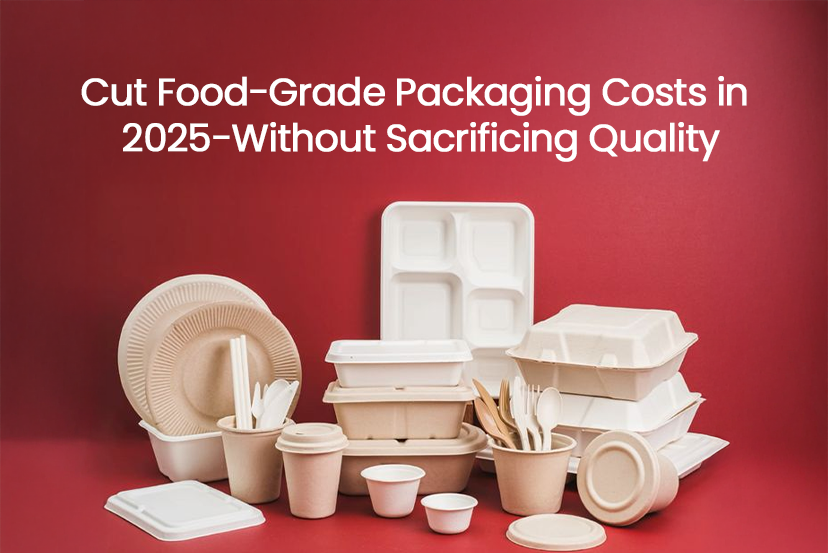
Cut Food-Grade Packaging Costs in 2025-Without Sacrificing Quality
Food packaging does not stop at a box
The reality is, the food packaging aspect of a product hasn’t always been the most invigorating section of the product. People would just take a product, a box, or a bag, seal it, and ship it, and that would be the end of that. But now? Packaging is much more than just a casing. It’s an integral element of the brand narrative, as well as a necessary protective measure for the product, and of course, it impacts profits as well.
Just to see, it is amusing that many companies manage to not get noticed while slashing 10 to 12% off their packaging budgets. That’s right! No flimsy plastic bags. No weak seals. Just a combination of more intelligent packaging choices.
So, what’s their secret sauce? It’s not cutting corners. It’s about picking the right materials. What do you think their secret is? No, it’s not that they pinch pennies here and there. It’s a combination of selecting the right materials, optimizing the designs, and establishing reliable contracts with the vendors. Let’s explore this a little more.
What Does Food-Grade Packaging Mean?
Simply put, food-grade means there are no chemicals that can leach in, no odd tastes, and no other concerns. There are always regulations, like the FDA and EFSA, but the principles remain universal in that food should be kept fresh, protected, and delicious.
Not doing this step? Mistake. Reputational damage, in conjunction with unsatisfied clients and product recalls, could be the end result.
The Main Players in Food-Grade Packaging
- Corrugated Cardboard: Keeps dry foods as well as fresh produce. Corrugated Cardboard is secondary-usable, strong, and a lot of companies use fibers with water-resistant coatings that come from recycled materials.
- Plastic Films and Poly Bags: The green alternatives that are more and more common, and are perfect for snacks, frozen foods, and anything needing moisture protection.
- Paper and Kraft Bags: Always used for fresh produce and bakery items, but should be moisture and grease-resistant.
- Glass and Metal Containers: The best and most popular for canned items, sauces, and various beverages. It can also be relatively expensive and heavy for transport due to the light and air resistance.
- Biodegradable Materials: These are the most recent materials used; they are eco-friendly, but be cautious of price and durability.
Other Considerations While Selecting Packaging
- Safety Comes First: Don’t be vague; food safety is a matter for the defense.
- Fit for Your Food: Based on the moisture and fragility of the food, and even whether it is fresh or frozen, the type of packaging shall vary.
- Green is Great If It Works: If the packaging does not overly charge, and retains the food well, then the sustainability of it is a big plus.
- Think Beyond Price: What, on the surface, looks like a low-cost option could lead to excess importation, excessive waste, and spoilage.
How Smart Companies Win at Food Packaging
- Test Samples Before You Commit: It is incorrect to believe that packaging is functional and will yield the desired results without being tested.
- Think Whole Package: All of it is important. If one of the components of the offer, the seals, the distractions, the covers, the inscriptions, the adhesives, or the interliners is weak, then the entire package could be destroyed.
- Choose Partners Wisely: Suppliers who offer constructive and supportive collaboration are very important.
- Keep Your Packaging Fresh: Don’t put it on autopilot. If new alternatives or modern approaches to packaging are not analyzed and revised on a constant basis, then profit will be lost.
Why Good Packaging Pays Off
Good packaging will lead to a decrease in the return of the product, decrease food that goes to waste, and increase the amount of satisfied and retained customers. If done correctly, it allows one to use it as a competitive advantage as opposed to being solely burdened with the cost.
Practical Tips That Actually Work
- Review Packaging Often
Touching the packaging once and not coming back to it is not the answer. It is a deficient approach to set the price and exclude yourself from the process. It is wise to allocate time in your schedule quarterly, as it is possible to save large sums from the system being reviewed. It is a yearly return of 8 to 15 percent. - Seek Out New Materials Proactively
Don’t let suppliers just be passive intermediaries waiting to deliver new materials. Each year, step outside the box to test new materials – you might discover alternative materials that provide better value. - Do Not Put All Your Eggs In One Basket
Maintaining 2 or 3 suppliers keeps the pressure on and helps to cultivate new ideas. This is about choice, and there is plenty of it. - Automate Where It Is Logical to Do So
Start small. Automate those areas that are labor-intensive and costly. Even the most rudimentary machines can assist greatly. - Use Metrics to Identify Better Opportunities
Analytics that analyze the design, source, and ship collaboratively can be counter-intuitive to savings, and provide better control and more efficient planning.
What Kind of Savings Can You Expect?
| Strategy | Time to See Impact | Savings Range |
| Packaging Reviews | 2-3 months | 8-15% |
| Supplier Additions/Review | 6-9 months | 10-15% |
| Sustainable Materials | 4-12 months | 5-12% |
| Targeted Automation | 3-6 months | Up to 25% |
| Data-Driven Decisions | 4-8 months | 5-8% |
Some Real-World Hurdles (And How To Beat Them)
Retooling means training new people, bringing onboard unscheduled suppliers, and managing price volatility. This is why flexibility and fostering deep supplier partnerships help. And thank goodness technology and rewards systems are streamlining this process.
Final Thoughts: Every Box Counts
For real wins, don’t think of packaging as an isolated expense, but as an integrated system. Balance design, materials, suppliers, and automation. The brands that dominate turn ceaseless evolution into a standard practice. Nobody is above having unprotected products. The product inside gets defended, the customers are defended, and the business stands to gain an amplified reputation.

Sustainable Packaging for Regulated Industries (Pharma, Food, FMCG)
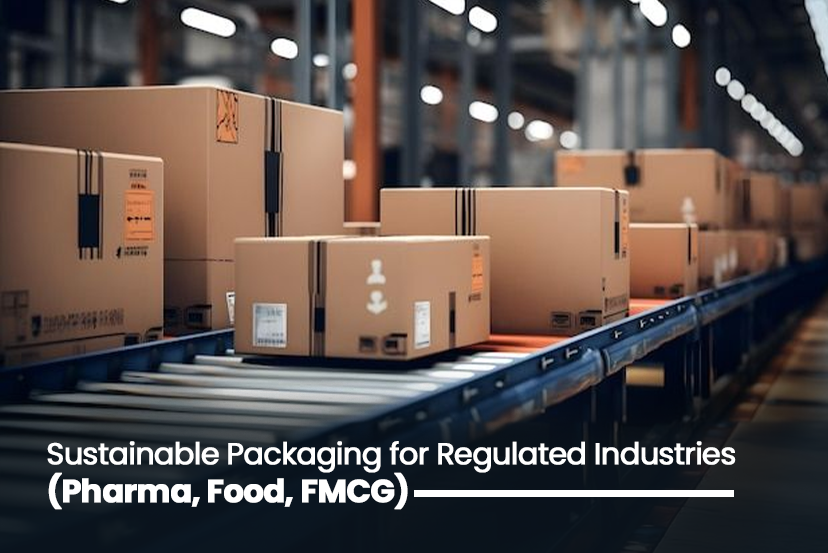
Sustainable Packaging for Regulated Industries (Pharma, Food, FMCG)
Sustainable Solutions for the Pharma and Food Industries
Professionals in the pharma, food, and FMCG sectors understand better than anyone how packaging regulations apply in these fields. Recycling packaging materials won’t do the trick. Packaging must also consider shelf-life, safety, contamination control, and tampering. These considerations can lead compliance teams to conclude that sustainability is impossible to achieve.
However, industry leaders are successfully adopting sustainable packaging. They apply innovative strategies that comply with regulations while minimizing material misuse, waste, and costs.
The solution is integrating sustainability into the packaging design decision-making processes.
So what are the challenges?
Regulated industries must comply with strict packaging design rules; reckless and untested design changes may not be legal. Unavoidably, any design change must go through a sequential testing, approval, and certification process.
This doesn’t imply that change is impossible in the field. It emphasizes that innovation must be applied to legal compliance in these industries.
What are the additional barriers to sustainable packaging in these industries?
- The materials have to be food- or pharma-grade.
- Packaging has to hold up over time, often across extreme temperatures
- Labels need to be compliant and maintain readable and scannable attributes.
- Not compromising on child resistance and tamper evidence becomes difficult.
- Shelf life and barrier properties still need to be spot-on
So yes, it’s a bit more complex. But it’s not impossible. And it’s already happening.
Solutions Being Implemented by Smart Teams
1. Switching to the Right New Materials
You can’t hope for a positive outcome just by adding a biodegradable pouch. However, replacing legacy materials with newer, tested, and approved sustainable substitute materials is a viable option.
Many companies replace multilayer, unrecyclable films with mono-material recyclable films, and they also switch from polystyrene trays to molded pulp or fiber trays that are fully recyclable, equally protective, and pulp trays are fiber.
Bonus: many of these new materials weigh less, which cuts shipping costs without compromising performance.
2. They’re Rethinking Overengineering
In pharma and food, it’s common to go overboard “just to be safe.” Extra layers. Bigger boxes. More inserts. But much of that isn’t needed anymore thanks to better materials and smarter testing.
Right-sizing and revalidating existing packaging setups often reveals places to cut down on waste without touching the product experience or safety levels.
One FMCG brand shaved 12% off its packaging weight across five SKUs just by updating box sizes and removing unnecessary protection. Product integrity? Unchanged.
3. They’re Not Waiting for Suppliers to Pitch Ideas
The most proactive teams don’t wait around for a packaging supplier to offer the “green” version of what they already buy. They ask for it directly-or better yet, request multiple options.
Even better? They test a few materials every quarter, before they need to make a switch. So when a regulation tightens or a cost spike hits, they’re not scrambling-they’re already ahead.
4. They’ve Got a System for Compliance + Sustainability
This is key: sustainable packaging that doesn’t pass compliance checks is useless. The teams getting it right are baking sustainability into their QA and regulatory processes from day one.
So instead of fighting the system, they build it into the workflow-testing shelf life, barrier performance, and handling right alongside recyclability and materials sourcing.
That’s how you make sustainable packaging real-not just theoretical.
Real-World Examples? They’re Everywhere
- A global pharma company rolled out recyclable PET bottles for its OTC range-FDA compliant and curbside recyclable
- A food brand launched a full product line in compostable film that still meets moisture barrier requirements
- An FMCG player dropped plastic trays in favor of molded pulp across 70% of their portfolio-saving money and weight without needing revalidation
None of these brands started with a giant rebrand. They started with one SKU, ran the tests, validated it… then scaled.
A Few Practical Starting Points
Not sure where to begin? Start here:
Audit what you’re using today.
Figure out which materials are overengineered or outdated. There’s almost always room to trim.
Work with suppliers who know your industry.
Not just sustainability vendors-but partners who understand pharma, food safety, or FMCG needs inside and out.
Test a few new materials per year.
Make it part of the process. Don’t wait for a crisis to start looking.
Don’t go it alone.
Involve your regulatory, legal, and ops teams early so you’re not backtracking later.
The Bottom Line: You Don’t Have to Choose Between Safe and Sustainable
In regulated industries, packaging changes will always come with some red tape. But that’s no excuse to stand still. The tools, materials, and partners exist to make real improvements—without compromising compliance or product quality.
And the upside? It’s not just about sustainability. These changes usually lead to better efficiency, fewer returns, lower freight costs, and stronger brand perception.
So no, you don’t have to go “cheap.” Just smarter.
Best in food and beverage packaging
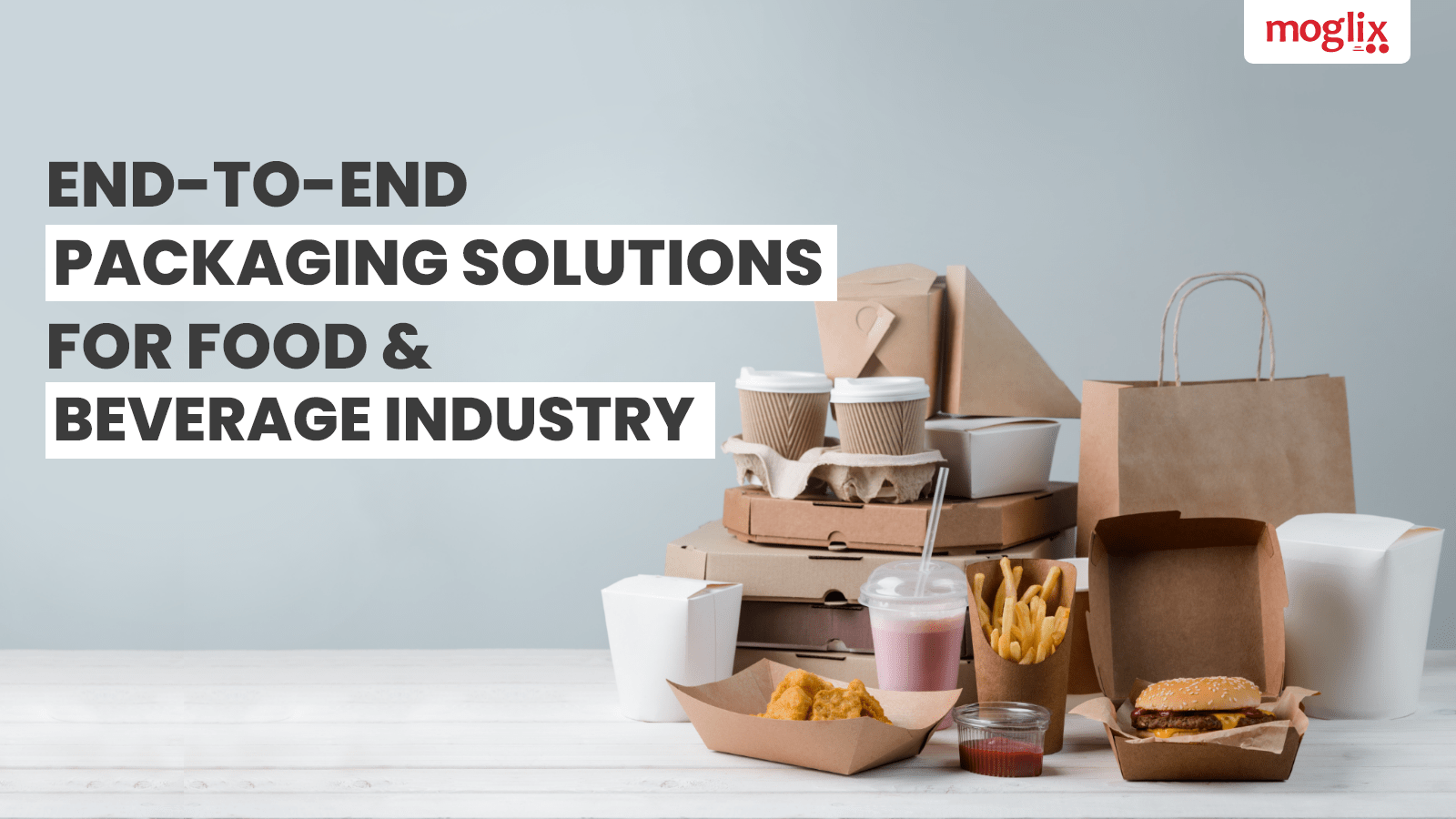
Best in food and beverage packaging
The global food packaging market is expected to grow from $338.34 billion to $478.18 billion byin 2028. In India alone, the industry is projected to reach $17.88 billion within the next 5 years. To truly stay ahead of the curve, businesses in this space need to constantly keep track of the latest developments in the food packaging sector.
If your organization is still facing packaging challenges,it is essential to identify why the right kind of packaging is necessary, in the first place.
The need for packaging in the food and beverage industry
Suitable and optimal food packaging offers the following benefits to your product and your business.
- Acts as a protection barrier between the product and external contaminants like oxygen, dust, and water vapor
- Promotes efficient handling by grouping small items together
- Allows transmission of information regarding usage, transportation, and product disposal
- Encourages consumers to purchase the product through the use of attractive packaging
- Helps detect tampering of the contents
- Makes inventory control easier
Types of packaging in the food and beverage industry
There are different types of packaging solutions for different businesses. Food and beverage packaging can be primary, secondary, or tertiary. Here’s what they each entail:.
- Primary packaging or inner packaging, which is in direct contact with the food or beverage product
- Secondary packaging, which is used to hold multiple primary packages
- Tertiary packaging or external packaging, which is used to protect secondary packaging during transit and storage
Forms of food and beverage packaging
Businesses operating in this sector can choose from different forms of packaging, each with varying levels of sustainability. Some common options are —
- Cardboard boxes or cartons
- Metal cans
- Glass bottles
- Shrink-wrap packaging
- Fabric based packaging
- Pouches
The latest trends in food and beverage packaging
Given the sensitive nature of the products involved, packaging in the food and beverage industry is about more than just eye-catching aesthetics. Packaging innovation is the need of the hour, as is sustainability. Check out some of the latest trends in food and beverage packaging.
- Frustration-free packaging
- Transparent packaging with clear labels
- Personalized eCommerce packaging
- Sustainable packaging
- Refillable packages
- Interactive packaging
Challenges in choosing the right type of packaging
Businesses in the food and beverage industry may face many roadblocks on the journey to streamline their packaging operations. Some of the most common challenges include —
- Elimination of single-use plastic
- The durability of frozen food packaging
- Balancing sustainability with quality
- Elevating the unboxing experience
- Upscaling or downsizing packaging as required
Overcome the challenges in packaging
With sustainable options for primary, secondary, and tertiary packaging, Moglix gives you simple yet effective packaging solutions. Visit our website to learn more and understand what’s best for your business.


