Primary vs Secondary vs Tertiary Food Packaging – What’s the Difference?
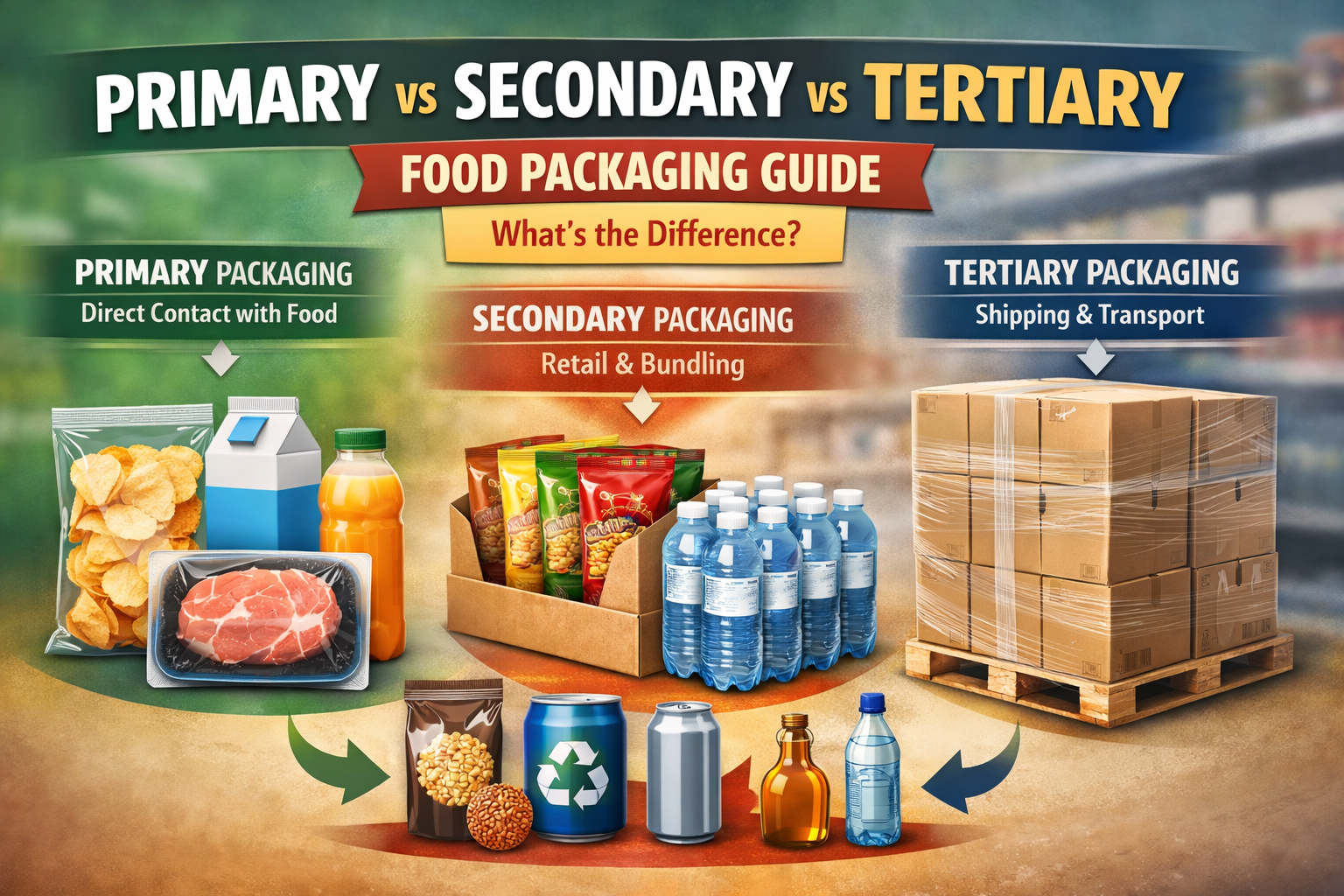
Primary vs Secondary vs Tertiary Food Packaging – What’s the Difference?
Food packaging plays a critical role in protecting products, extending shelf life, ensuring compliance, and enhancing brand visibility. Whether you’re a food manufacturer, distributor, or D2C brand, understanding the different levels of packaging helps you optimize cost, safety, and logistics.
In this guide, we’ll break down:
- Primary vs Secondary vs Tertiary packaging
- How to choose the right packaging for different food categories
- Best packaging solutions for dry foods
- Beverage packaging options (PET, glass, cans & sustainable alternatives)
- Top FAQs & People Also Ask
What Is Primary, Secondary, and Tertiary Food Packaging?
Primary Packaging (Consumer Packaging)
Primary packaging is the first layer that directly comes in contact with the food product.
Purpose:
- Protect from contamination
- Preserve freshness
- Provide essential product information
- Enhance shelf appeal
Examples:
- Snack pouches
- Milk cartons
- PET bottles
- Vacuum-sealed meat packs
- Chocolate wrappers
It must comply with food safety standards and be made from food-grade materials.
Secondary Packaging (Outer Packaging)
Secondary packaging groups multiple primary packages together for display, branding, and retail handling.
Purpose:
- Protect primary packaging
- Improve shelf organization
- Support branding & promotions
Examples:
- Corrugated cartons holding multiple juice bottles
- Shrink-wrapped water bottle packs
- Printed display boxes for snack bars
Tertiary Packaging (Transport Packaging)
Tertiary packaging is used for bulk handling, warehousing, and transportation.
Purpose:
- Protect goods during shipping
- Enable stacking and palletization
- Reduce transit damage
Examples:
- Palletized cartons
- Stretch-wrapped bulk shipments
- Industrial shipping crates
Quick Comparison Table
| Type | Direct Contact with Food | Purpose | Example |
| Primary | Yes | Protection & preservation | Chips pouch |
| Secondary | No | Grouping & branding | Carton of 12 juice bottles |
| Tertiary | No | Bulk transport | Palletized boxes |
How to Choose the Right Packaging for Different Food Categories
Choosing the right packaging depends on:
1. Shelf Life Requirements
- Long shelf life → Use barrier materials (multi-layer laminates, vacuum packs, MAP technology)
- Short shelf life → Lightweight and breathable materials may work
2. Moisture & Oxygen Sensitivity
- Dry foods need moisture barriers
- Oils & beverages require oxygen barriers
3. Storage & Transportation Conditions
- Frozen food → Cold-resistant packaging
- Export goods → Strong tertiary packaging
4. Regulatory Compliance
Ensure materials meet food safety standards (FSSAI or relevant regulatory bodies).
5. Branding & Consumer Experience
- Transparent windows for visibility
- Easy-tear & resealable features
- Eco-friendly claims for sustainability-conscious buyers
Best Packaging Solutions for Dry Foods (Grains, Pulses, Snacks)
Dry foods require protection from moisture, air, insects, and contamination.
Grains & Pulses
Recommended Packaging:
- Multi-layer laminated pouches
- BOPP or PP woven sacks (bulk)
- Vacuum-sealed packs for premium branding
- Stand-up zipper pouches
- Leak-proof food containers
Key Features Needed:
- Moisture barrier
- Tear resistance
- Resealability for consumer convenience
Snacks (Chips, Namkeen, Biscuits)
Recommended Packaging:
- Metalized polyester laminated pouches
- Nitrogen-flushed packs
- Pillow pouches
- Printed stand-up pouches
Why?
Snacks are sensitive to oxygen and moisture, which affect crispiness. Nitrogen flushing helps maintain freshness.
Beverage Packaging – PET, Glass, Cans & Sustainable Alternatives
Beverage packaging must ensure leak-proof storage, pressure resistance, and shelf stability.
PET Bottles
Best For: Water, soft drinks, juices
Advantages:
- Lightweight
- Cost-effective
- Shatter-resistant
- Recyclable
Limitation: Lower premium perception compared to glass.
Best For: Premium juices, dairy drinks, alcoholic beverages
Advantages:
- Excellent barrier properties
- 100% recyclable
- Premium appeal
Limitation: Heavy & fragile
Aluminum Cans
Best For: Carbonated beverages, energy drinks
Advantages:
- Excellent oxygen & light barrier
- Fast cooling
- Highly recyclable
Sustainable Alternatives
- Plant-based bio-plastics (PLA)
- Recycled PET (rPET)
- Paper-based bottles
- Returnable glass systems
Many brands are shifting toward circular packaging models to reduce their carbon footprint.
Top FAQs – Food Packaging
What is the difference between primary and secondary packaging?
Primary packaging directly contacts food; secondary packaging groups products for retail display.
Why is tertiary packaging important?
It protects products during transportation and reduces damage in bulk shipping.
Which packaging is best for dry foods?
Multi-layer laminated pouches with moisture barriers and resealable features work best.
Is PET safe for beverages?
Yes, food-grade PET is widely used and approved for beverage packaging.
What packaging increases shelf life?
Vacuum packaging, Modified Atmosphere Packaging (MAP), and multi-layer barrier films.
What are the 3 levels of food packaging?
Primary (direct contact), Secondary (grouping), and Tertiary (transport).
What is the best packaging material for snacks?
Metalized laminated pouches with nitrogen flushing.
Which beverage packaging is most sustainable?
Glass and aluminum are highly recyclable; rPET is also a growing sustainable option.
How do I choose packaging for my food business?
Consider shelf life, moisture sensitivity, transportation needs, regulations, and branding.
Conclusion
Understanding the difference between primary, secondary, and tertiary food packaging helps businesses improve product safety, reduce losses, and enhance branding. From moisture-resistant pouches for grains to PET and glass solutions for beverages, selecting the right packaging depends on product category, logistics, and sustainability goals. Investing in the right packaging strategy not only protects your food products – it strengthens your brand and boosts customer trust. If you are looking to buy packaging materials and solutions in bulk, Moglix Packaging is the one stop designation to procure them effortlessly. We ensure the purchase of packaging materials at the most competitive prices with customization an dpriniting options.

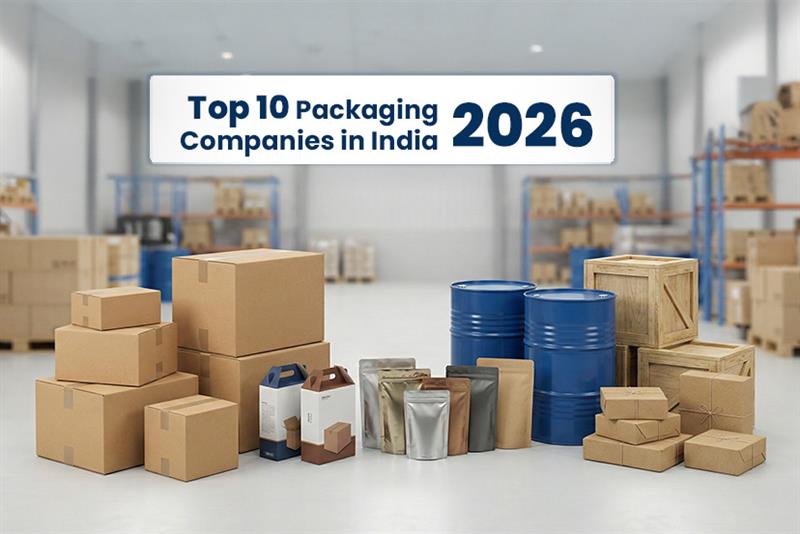
Top 10 Packaging Companies in India 2026: Types, Prices And Features to Look For
Top 10 Packaging Companies in India 2026: Types, Prices And Features to Look For
As we are heading towards rapid industrial growth, the packaging process and transformation cannot be neglected in driving the success of industries. The emergence and significance of packaging materials play a pivotal role in the growth of e-commerce, FMCG, pharmaceutical, and global export opportunities. Even the progressive approach towards sustainable packaging has changed the business game. Therefore, every business and industry prioritizes the right type of packaging for products from various trusted and reputable brands. Keeping its importance at peak, we have collected the latest data for the top 10 packaging companies in India (2026), offering complete packaging solutions. However, if you are looking to buy packaging materials in bulk, then Moglix is the one-stop destination to procure them seamlessly. With this guide, you will be able to find the best packaging companies suitable for your products and analyze the pricing expectation, their offering, and key features that meet your packaging requirements.
Why Packaging Matters in 2026?
Packaging has become an influential, sustainable, and eye-appealing aspect for many industries, especially products like personal care, logistics, food and beverage, and pharmaceutical. Therefore, businesses want to stand out in every segment of their product efficiency, while focusing on below listed factors:
- Sustainability & recyclability
- Cost efficiency
- Durability & protection
- Compliance with food/ pharma safety standards
- Brand appeal & customization
We’ll cover both industry leaders and what makes them stand out in 2026.
Check Out the Complete List of Top 10 Packaging Companies In India (2026)
If you are also among those businesses and industries looking to procure the best packaging materials from reliable sources, then Moglix is the one-stop destination to avail them seamlessly. We have provided you with the list of the best packaging brands you can rely on.
1. Uflex Ltd.
One of the highly rated and renowned packaging companies, Uflex Ltd, offers a complete and flexible packaging solution around the globe. They ensure the procurement of packaging solutions like printed films, flexible pouches, and high-barrier laminates for food items, covering the entire FMCG and medical sectors. The price range of their packaging material falls between ₹6–₹12 per unit, and printed films range between ₹150–₹300 per kg. The company is well known for providing ISO and FDA-certified and sustainable packaging solutions.
2. Essel Propack Ltd. (EPL)
Essel Propack Ltd., also known as EPL, is a reputed brand based in Mumbai offering top-quality laminated tube packaging solutions. The company has been serving industries like cosmetics, pharmaceuticals, and personal care. The price of their packaging materials falls between ₹5–₹30 per piece, depending on the size and printing requirement.
3. TCPL Packaging Ltd.
TPCl is a leading manufacturer in the segment of packaging material, specializing in cartons and cardboard solutions. The company has been serving major sectors like liquor, FMCG, and pharmaceuticals, offering a wide range of packaging solutions. The folding or coagulated cartons cost between Rs 8 to 40 per piece, based on design and size requirement.
4. Jindal Poly Films Ltd.
Headquartered in Nashik, Jindal Poly Films Ltd. is a major producer of polyester and polypropylene films used in flexible and specialty packaging. Its product portfolio includes BOPP, PET, and CPP films widely used across food, consumer goods, and industrial applications. Film prices generally range from ₹120–₹260 per kg. The company benefits from a backward-integrated supply chain and ongoing capacity expansion driven by recent investments.
5. Huhtamaki PPL Ltd.
This packaging company has wide horizons in the global market, specializing in overall packaging solutions. The company’s objective is to fulfill the primary packaging and labeling for various industries like Food and beverage, Pharmaceutical, and personal care brands. They have a diverse range of products for various premium to mid segments, typically priced between ₹7–₹20 per piece.
6. Polyplex Corporation Ltd.
Polyplex Corporation is a Noida-based firm and a leading manufacturer of packaging solutions, offering BoPET polyester films. The company mostly focuses on electrical insulation packaging solutions and industrial equipment packaging. The price of their products falls between ₹150–₹300 per kg.
7. Manjushree Technopack Ltd.
Manjushree Technopack Ltd. is a Bangalore-based firm and a prominent player in the manufacturing of packaging materials. They have been supplying a wide range of packaging materials, such as PET, HDPE, PP bottles and containers to FMCG groups, dairy industries, and pharmaceutical industries. The container price range falls between ₹10–₹50 per unit. They are well known for customization options according to the project requirements.
8. Cosmo Films Ltd.
Cosmo Film Ltd is a Delhi-based packaging material manufacturing company for specialty films and BOPP. They are widely known for lamination and flexible packaging solutions across various markets. Their products usually fall between ₹140–₹280 per kg.
9. Balmer Lawrie & Co. Ltd.
Balmer Lawrie & Co. Ltd. is a leading, reputable, and long-established packaging solution manufacturer offering multi-material packaging and covering a large segment of industries continuously for many years. They offer a wide range of packaging materials like barrels, large containers, and heavy-duty sustainable packaging for various industries and sectors. Their industrial packaging products typically start from ₹1,000 per unit and above.
10. Parksons Packaging
Parksons Packaging is an India-based company known for carton and specialty packaging solutions. It serves retail, FMCG, and luxury product segments with a strong focus on visual appeal and innovation. Customized cartons and packaging solutions generally range from ₹10–₹50 or more per unit. Parksons stands out for its design-centric approach and increasing use of sustainable packaging materials.
Types of Packaging & Applications
It is necessary to understand types sof packaging solutions provided by above above-listed brands and companies.
| Packaging Type | Common Uses |
| Flexible films & pouches | Snacks, beverages, and pharmaceuticals |
| Laminated tubes | Toothpaste, cosmetics, creams |
| Folding cartons | Liquor, pharma, retail boxes |
| Rigid plastic containers | Bottles for liquids, chemicals |
| Polyester/BOPP films | Labeling, lamination, barrier packaging |
Features to Look for When Choosing a Packaging Company
1. Material & Quality
- Barrier properties (oxygen/moisture resistance)
- Food-grade certifications (FDA, ISO)
2. Sustainability
- Recyclable or biodegradable materials
- EPR (Extended Producer Responsibility) compliance
3. Customization & Design
- Print quality & graphics
- Shapes, sizes, and structural design
4. Cost & Scale
- Competitive pricing
- Minimum order quantity (MOQs)
5. Delivery & Support
- Lead times and logistics reliability
- Technical support and R&D partnership
Typical Price Considerations (2026)
Pricing varies widely based on material, print quality, volume, and customization:
| Packaging Type | Approx. Price |
| Flexible pouches | ₹6–₹12 per pouch |
| Printed films | ₹150–₹300 per kg |
| Laminated tubes | ₹5–₹30 per tube |
| Cartons | ₹8–₹50 per piece |
| Plastic bottles | ₹10–₹50+ |
Final Thoughts
India’s packaging landscape in 2026 balances innovation, cost-efficiency, and sustainability. Whether you’re sourcing flexible packaging for food products, premium cartons for retail goods, or industrial containers for liquids or chemicals, there’s a top-tier company to match your needs. However, if you are looking to procure packaging materials and solutions in bulk, Moglix is the right platform to purchase them efficiently. Moglix ensures the procurement of primary, secondary, tertiary, and sustainable packaging at the most competitive prices from reputed and reliable brands, delivering to thousands of pin codes across India.
The Complete Guide to Primary, Secondary, and Tertiary Packaging
The Complete Guide to Primary, Secondary, and Tertiary Packaging
Wait-Which Packaging Is Which Again?
We have to admit that distinguishing between different types of packaging can rapidly become confusing. Primary, secondary, and tertiary levels can rapidly sound like a textbook chapter no one has requested.
Nonetheless, doing all of them correctly, consequently, being deliberate with each and every step and stage is crucial, especially in managing the costs, protecting the product, and ultimately the user’s experience.
This is why, in order to provide better customer service, protect the product, and move rapidly while still saving money, it is important to understand the relevant context in which different levels of packaging exist.
Let’s get into it.
First Up: What Are the 3 Levels of Packaging?
Think of packaging in layers. Each layer plays a different role, and they all work together to move your product from factory to shelf (or doorstep) safely and efficiently.
1. Primary Packaging – The Closest to the Product
We have to admit that distinguishing between different types of packaging can rapidly become confusing. Primary, secondary, and tertiary levels can rapidly sound like a textbook chapter no one has requested.
Examples:
- A bottle filled with shampoo
- A tablet in a blister pack
- A pack of chips
Why it matters:
- Keeps the product sanitary, sealed, and functional
- Contains legal information, expiration dates, and instructions for use
- Enhances shelf appeal and user experience
For the pharma or food industries, primary packaging must also comply with strict hygiene and safety regulations. It’s about more than aesthetics—it’s about legality and consumer trust.
2. Secondary Packaging – Grouping & Branding Layer
This is the packaging that combines several primary units for both logistics and branding.
Examples:
- A cardboard box containing six tubes of toothpaste
- A printed box that surrounds a bottle of perfume
- A tray of bottled water that is shrink-wrapped for easy transport
Why it matters:
- Simplifies storage, stacking, and shipping
- Provides extra space for branding
- Offers more protection during transport
- Streamlines barcode scanning, bundling, and tracking
Secondary Packaging is often the level at which businesses can begin optimizing for cost without impacting the product or customer experience. Design, volume, and materials all play a significant role.
3. Tertiary Packaging – Layer for Transporting and Bulk Handling
The final layer focuses on the ease and effectiveness of bulk handling and shipment. Although not often appreciated by the clients, it is instrumental to the shipment of products without any form of quagmires.
Examples:
- Pallets
- Stretch wrap
- Large shipping cartons
- Crates or bulk boxes
Why it matters:
- Protects goods in transit
- Maximizes transport efficiency
- Helps prevent loss and damage
- Key to warehouse and 3PL workflows
For businesses operating on an extended domain, a tertiary packaging layer can help minimize carbon, operational costs, and improve overall business efficiency.
How These Layers Work Together
Let’s bring in a practical case scenario for this:
Cough syrup in a bottle.
- The bottle is the primary packaging
- The printed carton it comes in is the secondary
- The corrugated box used to ship 48 cartons to a pharmacy is the tertiary packaging
Each layer has a distinct design and purpose. However, cooperation is crucial. If a layer contains a different form of construction, it is bound to create overspending or damaged cargo and pose compliance problems.
Why You Should Care (Even If You’re Not in Packaging)
This is the part where it gets a bit more interesting.
Regardless of whether your area of focus lies in operations, procurement, sustainability, or finance, understanding how these disciplines function both individually and in tandem between silos is essential as it provides:
- Cost savings: Is it possible there is excessive packing or redundant protection for products in multiple layers of packing?
- Sustainability: Can materials used in secondary or tertiary packing be decreased without compromising safety?
- Effectiveness: Do your packing formats cause delays in the warehousing system or increase freight expenses?
- Customer experience: Does your primary package impress your customers or is it just functional?
Smart businesses are using packaging reviews to cut waste, improve margins, and simplify logistics across the board.
A Quick Cheat Sheet
| Packaging Layer | Touches Product? | Main Purpose | Key Users |
| Primary | Yes | Protects product, informs user | Consumers, regulators |
| Secondary | No | Bundles, brands, protect | Retailers, logistics |
| Tertiary | No | Bulk handling, storage, transport | Distributors, 3PLs |
Where Optimization Usually Begins
If it is a matter of increasing efficiency or decreasing costs, this is where the majority of companies focus their efforts:
- Tertiary packaging: Changing out heavy boxes for lighter-weight corrugates, optimizing palletization, and improving dunnage systems.
- Secondary packaging: Rightsizing boxes, eliminating redundant empty space, and over-structuring inner cartons.
- Primary packaging: While this may be complicated to change, it is still worth investigating to achieve savings or extend shelf life.
There is no requirement to change everything in one go. A thorough evaluation of packing and shipping one product line or one use case is often a good start, and then gradually increasing focus as you gather tangible evidence is most effective.
Final Thought: Do not place Packaging at the Bottom of Your Priority List
If you are only considering packaging at the end of the product life cycle, you are likely missing out on a huge potential.
There’s a distinct part for each layer-primary, secondary, and tertiary. How about when they are crafted in isolation? That’s when costs start creeping in, damage rates rise, and shipping inefficiencies proliferate.
The companies overcoming this challenge are not merely concerned about packaging-they are concerned about packaging strategy. And it is paying off.
Because, packaging is not a mere box. At the end of the day, packaging is a business lever.
Moglix helping companies solve their enterprise packaging challenges

Moglix helping companies solve their enterprise packaging challenges
The packaging vertical of Moglix claims to meet the needs of around 70 percent of e-commerce orders in the country. Shobhit Goel in discussion with Paper Mart shares insights on how Moglix is helping companies gain visibility with aesthetically crafted packaging Solutions
PM: Please shed some light on Moglix and the key accomplishments of the company so far?
SG: The digital supply chain ecosystem of Moglix brings together 7 lakh+ SKUs of indirect procurement, packaging, infrastructure construction materials, made-to-order manufacturing, and supply chain cloud SaaS products to create the largest catalog for B2B commerce in India.
“Moglix Solutions has been able to transform MRO procurement and packaging for global enterprises using a state-of-the-art unified procurement platform. At present, we are working with over 600 large-scale enterprises.”
PM: Please tell us about the product range on the platform.
SG: As I mentioned earlier, we have several verticals, such as MRO, infra solutions, manufacturing as a service, fashion and packaging. With respect to Packaging solutions, we at Moglix, collaborate with businesses to map their packaging challenges and deliver relevant solutions in the primary, secondary and tertiary packaging. We currently serve all three types of packaging.
PM: What are the future plans of the company?
SG: This is just the beginning! We believe that paper is a strong segment and will continue to focus on that aspect.
“There is a scope for improvement in R&D, and assessing the ways to make paper packaging even more sustainable and reduce the carbon footprint of the paper mills.”


